Archive for May, 2009

Finding Lost Pets

How to Provide Recovery Tips That Save Lives

By Kathy “Kat” Albrecht

There is a science to finding lost people. Professional trained searchers don’t wander aimlessly in the woods when searching for a missing hiker. Instead, an organized search plan is implemented based on the knowledge of the behavioral patterns of lost people. For example, backpackers behave differently when lost and travel different distances than do hunters, berry pickers, and Alzheimer’s patients. And because search-and-rescue mangers are so familiar with these patterns of behavior, they can accurately predict where a lost person will be found. Backpackers are typically found on or near an established trail, hunters are typically found deep in the woods, and Alzheimer’s patients are typically found within a ¼ mile radius of where they became lost.

So what do we know about the behavioral patterns of lost pets? Thanks to Missing Pet Partnership, a grassroots nonprofit organization, we know that the three most common lost pet recovery tips that we give (place a classified Ad in the paper, post flyers in your neighborhood, and visit the local animal shelter every day) are not always the best pieces of advice! That’s because dogs are much different than cats. The methods that should be used to search for a lost dog, an outdoor-access cat that has vanished from its territory, and an indoor-only cat that has escaped outside are all entirely different methods. Dogs travel and are picked up by rescuers who determine their fate, the disappearance of an outdoor-access cat means that something has happened to interrupt that cat’s behavior of coming home, and indoor-only cats that escape outdoors hide in silence near their escape point. And it is not only the behaviors of lost dogs and cats that have been overlooked – the behaviors of the people who lose their pets and the behaviors of the people who find those lost pets impact the chances that a lost pet will be returned home.

Understanding these human and animal behaviors will increase the likelihood that lost pets will be found. Here is what we know so far:

Read the rest of this entry

Living Well, Dying Well

An urgent call came from Kate, her cat Strawberry, a short haired orange tabby, was attacked by a dog. Strawberry’s broken back resulted in being paralyzed and oxygen dependent. When our communication started Strawberry had her own agenda. This cat of loving character was about to give her person some wise advise. She not only loved her person but loved and lived her own life fully. Strawberry profoundly stated she wanted Kate to forgive the dog. She reminded Kate of the many small animals she had attacked and not only wounded but killed. The instincts of animals, the cycle of life, is respected. Strawberry had a loving, caring home for warmth and food as well as enjoyed outside adventures in the wooded land she explored. In the book Do Less, Achieve More by Chin-ning Chu it is written: “Only in living well can one learn how to die.” However, in order to live well, one must conquer the fear of living, which is rooted in the fear of death. As an animal communicator, I help people understand the animals experience leaving their bodies, why the animals passing is in divine order, purpose of the animal and persons time together, helping people let go of their companion, and support closure. Animals bring personal growth to our lives. At times the experiences with our animals may not seem pleasant, yet these experiences should be honored.

Below is an excellent example of living well and dying well.


As I was listening to Noreen share how she experienced the life and passing of her dog, Bailey Sue, I was amazed with her composure and wisdom. I asked if she would share her experience and beliefs on living and dying to give knowledge and comfort to those who read her words. Thank you Noreen.

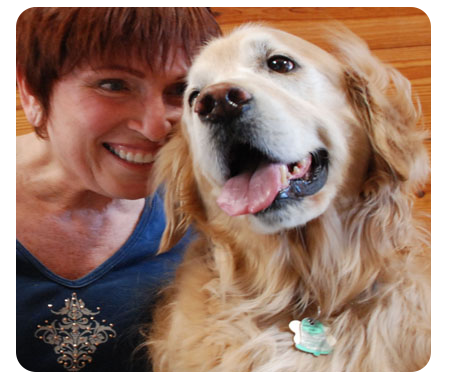
I was thinking about what you said about how I am with Bailey Sue’s passing. javornik_5x7 Although I am sad, I truly feel peaceful. In order for me to have peace whether an  animal or person I love passes, I must be clear on a few things. One is that this passage/transition is theirs and to let this manifest in the way it needs to be for  them. It is completely their journey and I am just a witness to this. Another is to have done or said what I needed to do so there are no regrets. And in Bailey Sue’s case to tend her in the best way I knew how. For me living this last piece, which included dying, can be done in the same way that you have always lived with that being. For us that included lots of fun, laughter, tears, friends, kisses, and love. Being with someone up to the very last breath can be just as sweet and lovely as being with them in health.

Noreen


“When my precious feline, Buddy, passed away, I was devastated. Through conversations with Karen, my intense grief was lessened as she translated comforting messages from Buddy and gave me insight into the spirituality of animals. I also learned a lot about Princess, Buddy’s sister, and her thoughts and needs. Karen continues to help me communicate with my animals, and I consider Karen a wonderful friend.”  D.S.


Looking for a reliable WordPress hosting plan? We found the best!